Badlands After Dark
Drumheller isn’t officially designated as a dark sky preserve, yet the Badlands have a remarkable ability to dim the world around you and let the night sky take centre stage.
Explore MoreAfter sunset, the hoodoos fade into shadow, the coulees go quiet, and the valley settles into a kind of stillness that feels intentional. With the lights out and the horizons wide open, the sky takes over, and suddenly you are standing in one of Alberta’s most unexpected and rewarding places to watch the night unfold.
The valleys help block distant light, prairie roads open up uninterrupted views, and geological formations create natural foregrounds that make even a casual night of stargazing feel cinematic. Whether you come with a camera, a lawn chair, or just a blanket and curiosity, the Badlands invite you to slow down and look up.
Aurora Borealis in 2026:
Peak Viewing Year
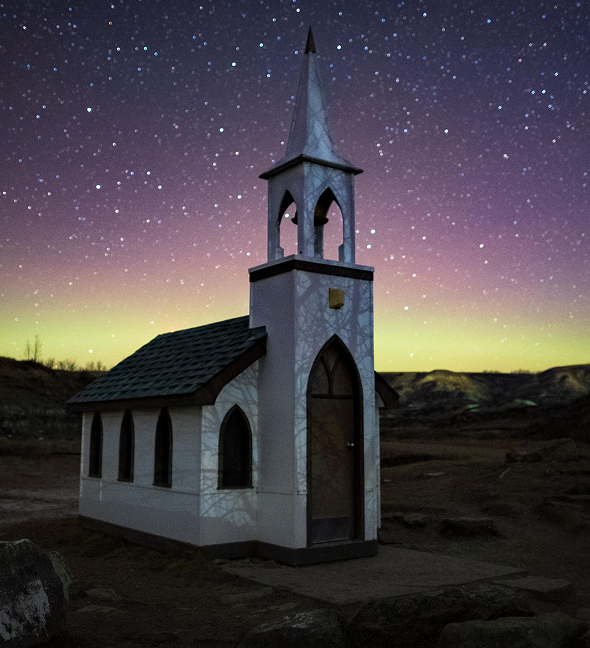
Watching the aurora borealis in the Badlands feels a little like waiting for something extraordinary to arrive without warning. You do not know exactly when it will appear or how long it will stay, but when it does, everything else fades into the background. The northern lights often begin as a faint glow on the horizon, then brighten, stretch, and ripple across the sky in slow, fluid motion.
Because we are entering a peak period of solar activity, 2026 brings a higher chance of stronger and more frequent aurora displays across Alberta, including right here in Drumheller. With dark valleys, wide horizons, and relatively low light pollution, the Badlands offer a surprisingly powerful place to watch the sky come alive.
Aurora Viewing at a Glance
Auroras can appear outside these hours, but this window tends to be the most active. Look for nights with clear skies and a KP index of 5 or higher.
 Best Hours:
10 PM to 2 AM
 Best Months:
Late August-April
 Peak Seasons:
September-October and November-March
2026 Meteor Shower Calendar
In 2026, several major meteor showers will be visible in the Drumheller region, many of them bright enough to see with the naked eye. If you are planning a late-night adventure, these are the nights worth marking on your calendar.

Night Sky Watching Tips


Simple Astrophotography with Your Phone
You do not need a fancy camera to capture the Badlands night sky. Your phone can collect light over several seconds, revealing stars, colour, and movement your eyes cannot hold onto in real-time.






Make it a Moment

Stargazing Sounds Better with the Right Soundtrack
We built an actual playlist for nights like this. Mostly Canadian. Mostly indie + folk. 100% Badlands after dark.
Scan. Listen. Don’t talk too much. Let the sky do the heavy lifting.